Source Induction Heating Filter Power Capacitor for Motors, HVAC, and Furnaces
Compare 30 verified listings for Induction Heating Filter Power Capacitor designed for motors, HVAC systems, and induction furnaces. Buyers can review specifications like capacitance, voltage ratings, and packaging options to find suitable suppliers for general power applications.
Key considerations
Products List


General Electric Induction Heating Capacitors 3000kvar with Water-Cooled Tube
$212.00 - $356.00
MOQ: 1 Pieces
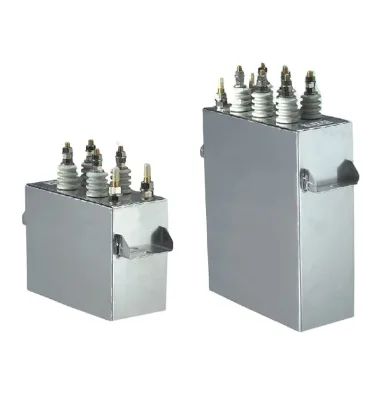

Electrothermal Capacitor, Electric Capacitor for Improving Power Factor of Induction Heating
$500.00 - $5000.00
MOQ: 1 Pieces

Water-Cooled Power Capacitor for Induction Heating Systems with USA Design Standard
$10.00 - $500.00
MOQ: 10 Pieces


Electric Induction Heating Equipment 450V Capacitor for Industrial Use
$38.00 - $40.00
MOQ: 100 Pieces


Electric Induction Heating Equipment Shunt Capacitor for Industrial Use
$38.00 - $40.00
MOQ: 100 Pieces




Comprehensive Sourcing Guide
Strategic Sourcing Guide for Induction Heating Filter Power Capacitors
Understanding the Technical Landscape of Filter Power Capacitors
When sourcing components for induction heating systems, buyers must first distinguish between the various capacitor architectures available in the global market. The core keyword "Induction Heating Filter Power Capacitor" points to a specific subset of components designed to manage high-frequency currents and filter harmonic distortions within power electronics. Based on the available product data, the market presents a diverse array of technical configurations, ranging from polypropylene film capacitors to electrolytic variants.
A critical observation in the current supply landscape is the variation in manufacturing materials. Some listed products utilize polypropylene as the primary manufacturing material, which is a standard for high-voltage, high-frequency applications due to its low dielectric loss and self-healing properties. In contrast, other entries in the dataset specify "Electrolytic" as the manufacturing material or electrolyte type, suggesting a different application profile, potentially for lower frequency or specific filtering requirements. Buyers must verify the dielectric material against their specific induction heating frequency to ensure optimal performance.
The structural design of these capacitors also varies significantly. The data indicates the presence of both "Surface Mount" and "Through Hole" packaging types, alongside "Vertical Type" structures. For induction heating machines, which often require robust mechanical stability to withstand vibration and thermal cycling, the "Vertical Type" and "Through Hole" configurations are frequently preferred for their mechanical rigidity. Furthermore, the "Structure" attribute is listed as "Fixed Capacitor" in several instances, confirming that these are non-adjustable components intended for permanent installation in filter circuits.
Critical Technical Specifications and Performance Parameters
Selecting the correct capacitor requires a rigorous review of technical specifications, as the operating environment of an induction heater is demanding. The dataset reveals a wide range of capacitance values, with observed ranges spanning from 1-50 microfarads (µF) up to 50-100 µF. This variance implies that the procurement strategy must be application-specific; a general-purpose filter may require a different capacitance than a high-voltage resonant circuit.
Voltage ratings are equally critical. The provided facts list specific rated voltages, including 380V and 0.75KV (750V). In the context of induction heating, where voltage spikes and high-frequency transients are common, the rated voltage must exceed the peak operating voltage of the system with a significant safety margin. Buyers should not assume that a 380V rated component is suitable for a system operating near that limit without further verification.
Current handling capabilities are another vital parameter. One specific product entry notes a "Max Current" of 600A, which is a substantial figure indicative of heavy-duty industrial applications. This parameter is often linked to the internal construction, such as the "Cooper Busbar" layout mentioned in the data, which facilitates high current flow with minimal resistance. When evaluating suppliers, procurement teams must request detailed datasheets that confirm the RMS current ratings and the thermal derating curves, as these are not always explicitly stated in general product listings.
The following table summarizes the key technical attributes observed in the current market data to assist in initial screening:
| Attribute Category | Observed Values in Market Data | Sourcing Implication |
|---|---|---|
| Manufacturing Material | Polypropylene, Electrolytic | Verify dielectric loss and frequency response. |
| Capacitance Range | 1-50 µF, 50-100 µF | Match to circuit resonance requirements. |
| Rated Voltage | 380V, 0.75KV | Ensure margin for voltage spikes. |
| Max Current | 600A (specific entry) | Confirm thermal management for high current. |
| Structure | Fixed, Vertical, Surface Mount, Through Hole | Select based on mechanical mounting needs. |
| Packaging Type | Surface Mount, Through Hole | Determine assembly method compatibility. |
Compliance, Certification, and Quality Assurance Protocols
In the industrial sector, compliance is not merely a formality but a prerequisite for operational safety and liability protection. The supply data indicates that many products carry "ISO" and "CE" certifications. While these are standard marks, buyers must verify the specific scope of these certifications. The presence of "ISO" suggests adherence to quality management systems, while "CE" indicates conformity with health, safety, and environmental protection standards for products sold within the European Economic Area.
However, the dataset also lists several background standards such as EN 60110-1, ISO 9001, IEC 61071, and IEC 61881. It is crucial to note that these are listed as "low-confidence background" information. Buyers should not assume that every product listed automatically meets these specific international standards. Instead, the procurement process must include a direct request for test reports or certificates of conformity that explicitly reference the relevant IEC or EN standards for the specific capacitor model being purchased.
Quality assurance is further emphasized by the "Quality: Guarantee" attribute found in the product listings. This suggests that reputable suppliers in this sector offer some form of warranty or performance guarantee. To validate this, buyers should inquire about the specific terms of the guarantee, including coverage for premature failure, manufacturing defects, and the process for handling claims. Additionally, the "Service: High" attribute implies that suppliers are expected to provide robust after-sales support, which is essential for maintaining continuous operation in industrial settings.
Cost Drivers and Commercial Terms Analysis
The commercial landscape for induction heating capacitors is characterized by a broad price range, observed between $0.01 and $5,000 USD. This wide disparity is driven by several factors, including the capacitance value, voltage rating, physical size, and the complexity of the internal construction. High-voltage, high-current capacitors with specialized busbar layouts and custom dimensions will naturally command a higher price point compared to general-purpose, lower-specification units.
Minimum Order Quantity (MOQ) is another significant cost driver. The observed MOQ range spans from 1 to 5,000 units. For small-scale prototyping or maintenance replacements, buyers may find suppliers with low MOQs, whereas large-scale production runs might benefit from negotiating better unit prices with suppliers offering higher volume tiers. The "Supply Ability" of 1,000 sets per month is a specific data point that indicates the production capacity of certain manufacturers, which buyers should cross-reference against their own demand forecasts to ensure supply continuity.
Payment and delivery terms also play a role in the total cost of ownership. The data lists "T/T" (Telegraphic Transfer) as a standard payment method, which is common in international trade. Delivery terms such as "Fob/CPT/EXW/CIF" indicate that the price structure can vary based on the Incoterms selected. Buyers must carefully calculate the landed cost, including freight, insurance, and customs duties, which are included in CIF (Cost, Insurance, and Freight) but excluded in EXW (Ex Works).
Lead times are generally reported as "3-5 Days" for delivery in some contexts, but this likely refers to the production or shipping window for stock items. For custom-sized capacitors, where the standard is listed as "customer's size" or "customized," lead times will be significantly longer. The "Wooden Case" and "Standard Packaging" options suggest that specialized packaging is available, which may impact shipping costs and protection during transit.
Typical Applications and System Integration Requirements
Induction heating filter power capacitors are integral to several industrial applications, as indicated by the "General Usage" and "Application" attributes. These components are essential in "Inductor Furnace Accessory" setups, where they help stabilize the power supply and filter out noise generated by the high-frequency inverter. The "Induction Heating Machine" classification confirms their primary role in this sector.
Beyond induction heating, the data suggests these capacitors are also used in "Power," "High Voltage," "General Purpose," "AC / Motor," "Lighting," "Air Conditioner," "Fan," and "Automobile" applications. This versatility highlights the importance of selecting a capacitor that matches the specific electrical characteristics of the target application. For instance, a capacitor used in an air conditioner motor start circuit may have different requirements than one used in a high-voltage induction furnace filter.
The "Special Feature: Welding" attribute points to a specific application in welding equipment, where capacitors are used to store and release energy rapidly. In this context, the capacitor must withstand high surge currents and frequent cycling. The "Layout: Cooper Busbar" mentioned in the data is particularly relevant for these high-current applications, as it ensures efficient current distribution and minimizes inductance.
Supplier Evaluation and Long-Term Procurement Strategy
Evaluating suppliers for induction heating capacitors requires a multi-faceted approach. The "Location" data indicates that many products originate from "China," with specific mentions of "Shanghai China" and "Zhejiang, China." While these regions are known for manufacturing capabilities, buyers should verify the specific factory location and audit the supplier's production facilities to ensure they meet quality and safety standards.
The "Brand Name: JKCN" is mentioned in the dataset, but buyers should not rely on a single brand. Instead, they should evaluate the supplier's overall reputation, technical support capabilities, and history of delivering consistent quality. The "Customization: Available" and "Customized: Yes" attributes suggest that many suppliers offer tailored solutions. For critical applications, customizing the capacitor size (e.g., "343114229mm" or "customer's size") can optimize performance and fit within the equipment enclosure.
Long-term procurement considerations include the availability of spare parts and the stability of the supply chain. The "Capacity Error: 5%" is a specific tolerance mentioned, which buyers should use as a benchmark for quality. If a supplier cannot consistently meet this tolerance, it may indicate a lack of process control. Additionally, the "Product Name: Electric Thermoelectric Capacitor" and "Electric Heating" electrolyte attributes suggest that some products are designed for thermal applications, requiring careful selection to prevent degradation under high-temperature conditions.
Buyers should also consider the "Packaging Type" and "prod_packing" details. "Wooden Case" packaging is often used for heavy or high-value items to prevent damage during shipping, while "Standard Packaging" may suffice for smaller units. Ensuring that the packaging is appropriate for the shipping method and destination is crucial to prevent damage and ensure the capacitor arrives in perfect condition.
In conclusion, sourcing induction heating filter power capacitors requires a deep understanding of the technical specifications, a rigorous verification of certifications, and a strategic approach to commercial terms. By carefully analyzing the observed data and applying disciplined procurement practices, buyers can secure high-quality components that ensure the reliability and efficiency of their induction heating systems. The diversity in the market offers opportunities for customization and optimization, but it also demands a high level of due diligence to navigate the complexities of the supply chain effectively.
FAQs
What manufacturing materials are used for these capacitors?
The capacitors are primarily made from polypropylene or electrolytic materials. Polypropylene is standard for high-voltage applications, while electrolytic variants serve different filtering needs. Buyers must verify the dielectric material against their specific induction heating frequency to ensure optimal performance.
Which capacitance ranges are available in the current market?
Observed capacitance values range from 1 to 50 microfarads and 50 to 100 microfarads. This variance implies that procurement strategies must be application-specific. A general-purpose filter may require a different capacitance than a high-voltage resonant circuit.
Can these capacitors be customized to specific sizes?
Yes, customization is available with standards listed as customer's size or customized dimensions. Specific sizes like 343*114*229mm are noted, but custom options allow optimization for equipment enclosures. Lead times will be longer for custom-sized capacitors compared to stock items.
What certifications do these products typically hold?
Many products carry ISO and CE certifications. While these marks suggest adherence to quality management and safety standards, buyers should verify the specific scope. It is crucial to request test reports that explicitly reference relevant IEC or EN standards for the specific model.
How long is the delivery time for these components?
Delivery times are generally reported as 3 to 5 days for certain stock items. However, for custom-sized capacitors, lead times will be significantly longer. Buyers should cross-reference production capacity, such as 1000 sets per month, against their demand forecasts.
What is the typical price range for these capacitors?
The observed price range spans from 0.01 to 5000 USD. This wide disparity is driven by factors like capacitance value, voltage rating, and physical size. High-voltage, high-current capacitors with specialized busbar layouts naturally command higher prices than general-purpose units.